Isobel
Finnegans WakeIsobel is the sleeping girl whom the passage presents as the sole beloved of the surrounding figures and as the imagined center of a future courtship. Her portrait unfolds through a sequence of possible adult identities, then settles on her in a quiet April bed: beautiful, still, and already addressed by the language of desire and marriage.
Identity and Imagined Futures
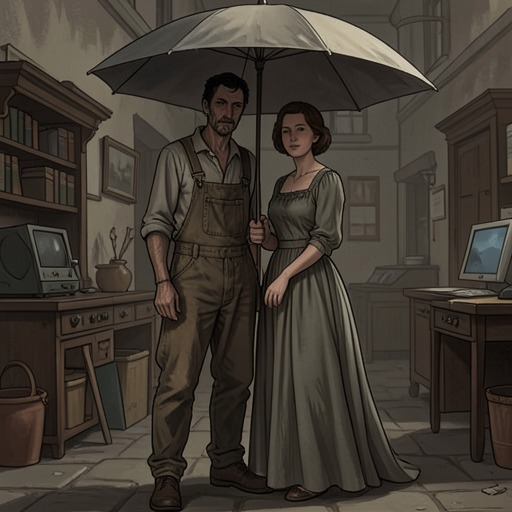
The passage gives Isobel several prospective lives rather than one settled biography. When she grows up, she may take the veil as Sister Isobel, a presentation nun barely twenty, dressed in a pure coif. On another Sunday, at Mistlemas, she appears as a Samaritan nurse, still beautiful and still in her teens, with stiffly starched cuffs. Christmas and Easter mornings bring a further imagined figure: an eighteen-year-old widow, Madame Isa Veuve La Belle, wearing a long black veil with orange blossoms. The rapid changes of religious vocation, nursing, and widowhood make her future seem at once elaborately pictured and radically unsettled.
These identities are described from outside her own speech. The passage supplies no account of Isobel choosing among them; instead, it casts her future in the language of other people’s projections, moving from the nun’s coif to the nurse’s cuffs and the widow’s veil. The succession makes her less a character with a narrated decision than a figure whose possible adulthood is imagined around beauty, service, and loss.
The Sleeping Girl
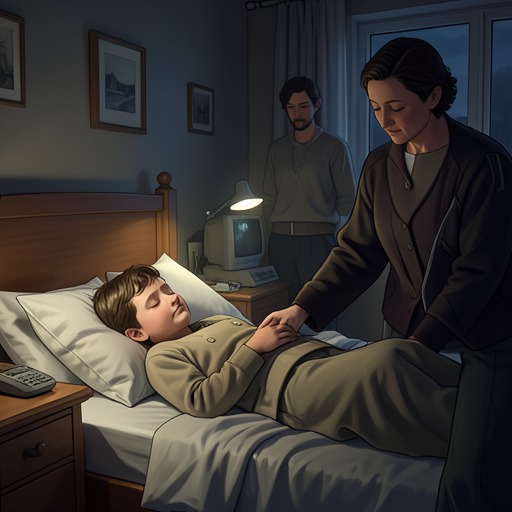
After projecting those futures, the passage returns to Isobel as a child asleep in her April cot, within her singing chamber. Her greengage-flavoured candy whistle is paired with a crazy quilt, small, concrete objects that locate the dreamlike praise in the furnishings of a child’s room. She lies quietly beneath the whitethorn, figured as a lost-happy leaf and a flower stilled; the surrounding woods and their mauves of moss and Daphne-dews deepen the impression of beauty suspended in stillness.
That stillness is not simply an observation of sleep. The description moves from her wildwood eyes and primrose hair to a lover’s wish that she will soon win, woo, and wed him. The imagined courtship is therefore placed beside the image of a sleeping child: the speaker’s desire belongs to a future tense, while Isobel herself remains quiet and unresponsive in the scene.
Desire and Narrative Form
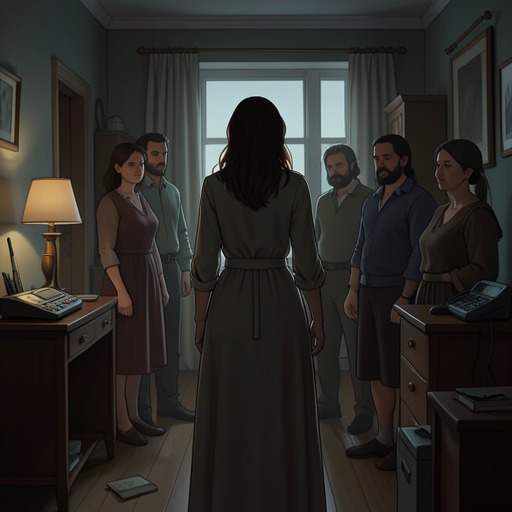
The passage calls Isobel the only girl they loved and the queenly pearl they prize, making her a focus of collective affection as well as of an individual lover’s address. Yet the language of praise does not give her a reciprocal declaration. Her beauty is rendered through elaborate images of woods, flowers, and a jewel, while the anticipated marriage is voiced as the speaker’s longing. The contrast between that fluent desire and her silence defines the scene’s asymmetry.
Isobel’s portrait also depends on continual verbal transformation. Her name shifts toward Isabelle and Isa within the envisioned identities, and the prose turns vocation, age, dress, and season into a succession of fleeting possibilities. She remains, at the end of the passage, the beautiful sleeping girl around whom those futures and desires gather—not a completed adult biography, but a dreamlike promise whose outcome is left open.